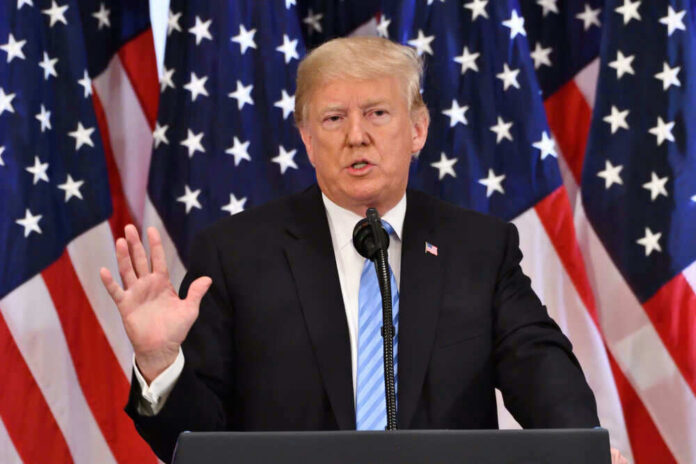
President Donald Trump’s proposal to rename the Department of Defense to the Department of War has sparked fierce pushback from the expected liberal camps.
Story Highlights
- President Trump proposes reverting the Department of Defense to its original “Department of War” designation.
- The move is framed as a return to historical roots and a reflection of military strength.
- The proposal lacks modern precedent and raises questions about congressional authority and global perception.
- Debate erupts over the symbolic and practical implications for the U.S. military and national identity.
Trump’s Proposal: A Return to Historical Strength
President Trump publicly called for renaming the Department of Defense (DoD) to the “Department of War,” arguing that the current name is “too defensive” and does not adequately reflect America’s history of military victories.
Trump made this announcement during high-profile Oval Office events, including a meeting with South Korean President Lee Jae Myung, emphasizing the importance of projecting strength on the world stage. He asserted that the historical title would better represent America’s willingness to act decisively if necessary.
Trump stated the change could happen “over the next week or so,” but later clarified that the final decision would rest with Defense Secretary Pete Hegseth. The president suggested further announcements would follow in the coming weeks.
This proposal, unprecedented in modern U.S. history, has ignited debate among lawmakers, defense officials, and the public. Trump maintains that the shift would signal a more assertive U.S. posture, invoking the nation’s history of military success when the department bore its original name.
Historical Roots and Legal Considerations
The U.S. military’s central administrative body was known as the “Department of War” from its founding in 1789 until 1947. The National Security Act of 1947 reorganized the military, combining the Army, Navy, and newly formed Air Force under the Department of Defense.
The name change was finalized in 1949 as part of post-World War II restructuring designed to unify the armed services and modernize military command.
No modern precedent exists for returning to the original designation, and the process would likely require congressional action, despite Trump’s assertion that such approval may not be necessary.
Legal experts and historians point out that Congress holds legislative authority over federal agency names, a precedent established during the postwar reorganization.
While the president can propose or direct executive actions, formal changes of this magnitude traditionally require legislative approval. This reality has already drawn attention from congressional leaders and legal scholars, who may challenge the administration if it moves forward unilaterally.
Symbolism, Identity, and International Perception
The proposal arrives amid ongoing debates over U.S. military policy and the symbolism of American defense institutions. Trump and his supporters argue that restoring the Department of War’s historical name would reinvigorate national pride and reflect a willingness to proactively defend American interests.
Critics, including some military historians and policy analysts, warn that the change could signal a more aggressive U.S. military posture, potentially straining alliances and heightening concerns among both allies and adversaries.
This symbolic shift also raises practical questions for service members, defense contractors, and policymakers. Rebranding would entail significant administrative costs and could create confusion among personnel and the public.
Moreover, the move may foster partisan divisions in Congress and the media, as lawmakers debate the appropriateness and implications of such a change in national identity.
Expert Perspectives and Broader Impacts
Military historians emphasize that the Department of War reflected a different era in U.S. policy, one focused on direct warfighting rather than deterrence and defense.
The 1947 and 1949 changes were intended to modernize and unify military command structures, not to signal weakness. While some commentators view Trump’s proposal as political theater, others see it as a genuine effort to restore historical pride and assertiveness.
Policy analysts caution, however, that the symbolic shift could have unintended consequences for international relations and U.S. military doctrine.
Trump floats renaming DOD to ‘stronger’ Department of War https://t.co/An7dX1gtDO
— One America News (@OANN) August 25, 2025
For now, the proposal remains under consideration, with no formal executive order or congressional action reported as of today. Defense Secretary Pete Hegseth has been tasked with reviewing the idea, and further developments are expected in the coming weeks.
The debate highlights deeper questions about American values, military identity, and the nation’s role on the global stage—a subject certain to remain front and center as the conversation continues.
Sources:
Trump proposes renaming Defense Department to ‘Department of War’
Trump, Hegseth float renaming Defense Department to Department of War
Department of Defense to be renamed Department of War within week, Trump says
Trump, Hegseth float renaming Defense Department to Department of War