
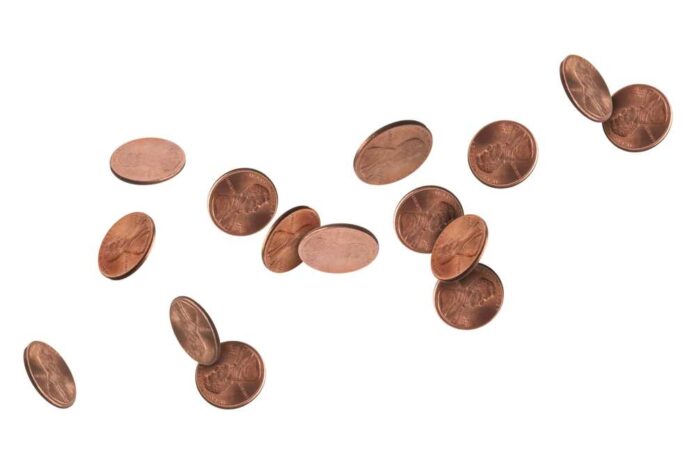
In a historic decision, the Treasury Department has announced that penny production will come to a halt, leaving many scratching their heads over the long-term implications.
See the tweet below!
In the wake of rising costs, each penny now costs more to produce than its face value.
The decision to end production follows former President Donald Trump’s proactive budget measures.
The U.S. Department of Treasury placed its final order of penny blanks, signaling an end to production after the current inventory runs out by early 2026.
President Trump had directed the halt on new penny production back in February to eliminate unnecessary government spending.
The production cost of a single penny surged by 20% last year, reaching 3.69 cents, which starkly contrasts its insignificant one-cent face value.
Ending penny production could save an estimated $56 million annually with reduced materials costs.
Despite the halt, pennies remain legal tender and over 114 billion are still circulating.
This decision echoes similar moves by other countries like Canada and Australia, who have already phased out their one-cent coins.
Treasury Secretary Scott Bessent mentioned a possibility of breaking even on nickel production by altering their composition since they also are costly, at 13.78 cents each to produce, compared to their five-cent value.
“The United States Mint will continue to manufacture pennies while an inventory of penny blanks exists,” a Treasury Department spokesperson said, cited by NBC News.
The decline in demand for pennies comes as more Americans prefer cards and digital payments.
Less than 20% of transactions are now cash-based, as per the Federal Reserve Bank of Boston.
Some stores might start rounding prices to the nearest nickel due to the penny phase-out, though the increase in electronic payments might alleviate this concern.
Critics argue that eliminating the penny will increase demand for nickels, leading to further financial losses due to high production costs.
However, advocates of the phase-out believe in cost savings and efficiency.
Rep. John Rose pointed out this potential increase in nickel circulation while Secretary Bessent noted that dimes remain profitable.
Though controversial, the decision to end penny production marks a significant fiscal measure promising immediate financial benefits for taxpayers.
As penny production winds down, it’s time to see if this change steers America toward more efficient economic practices.
The U.S. Treasury Department says it will phase out production of new pennies early next year after Pres. Trump asked the agency to stop producing the coin that has been part of the American currency for more than 230 years. https://t.co/SEkNiHAQ0f
— ABC News (@ABC) May 22, 2025